Disability meets Architecture
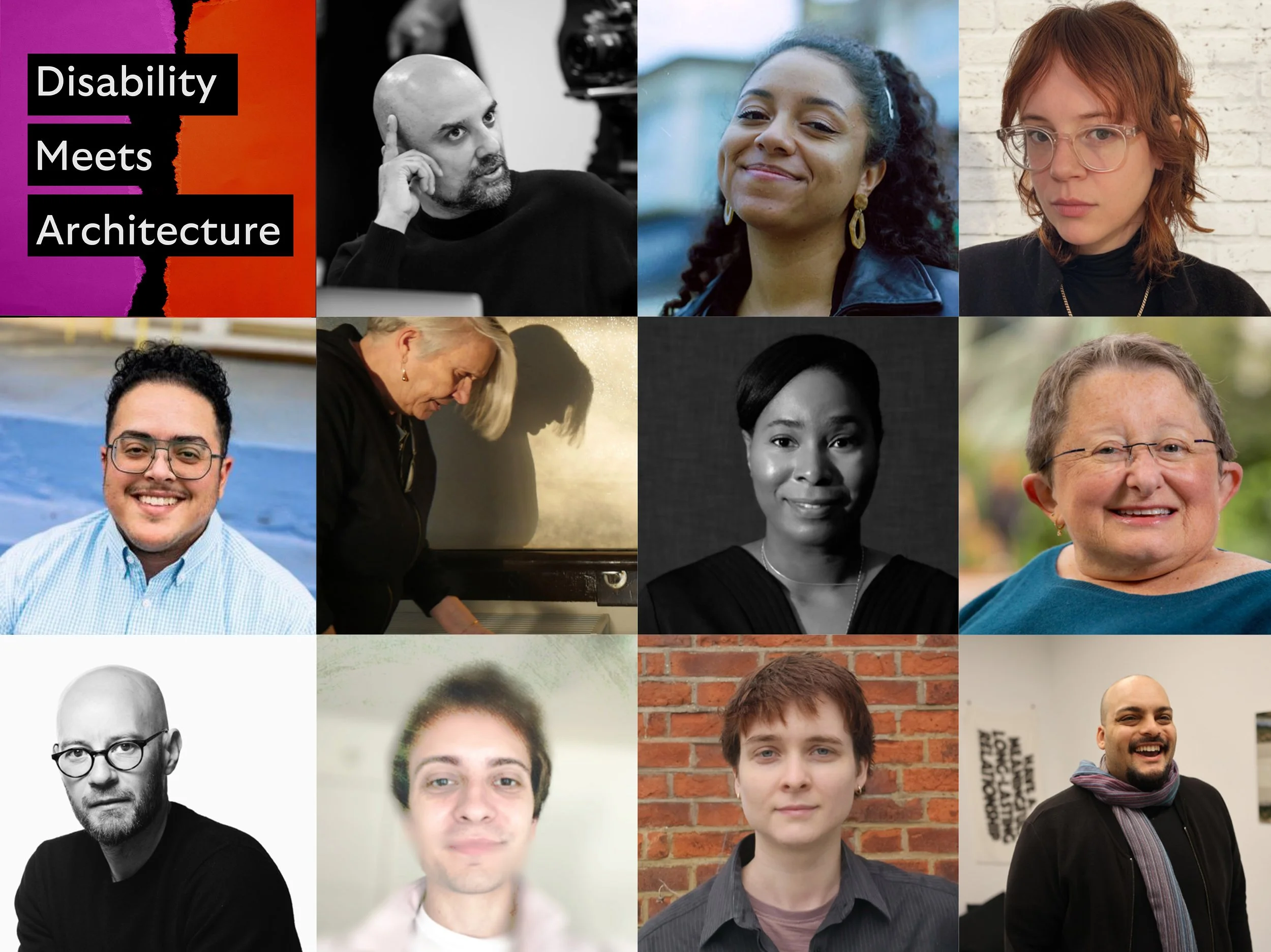
Disability Meets Architecture (DMA) is a co-created podcast miniseries, enabling conversations that cross boundaries between architecture, disability studies and related disciplines; and across theory and practice beyond the conventions of conventional access.
Over the episodes, we draw out some productive frictions - not as underlying conflicts in attitudes or approaches that can shut down a discussion, but as something generative of further inquiry, curiosity, and collaboration.
Conversations in the series includes:
Project Intro: Round Tower with Jos Boys and Aimi Hamraie
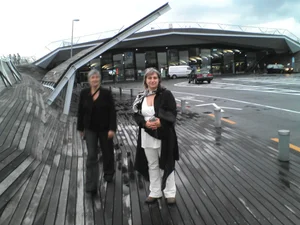
The intro episode sees the series hosts Jos Boys (DisOrdinary Architecture) and Aimi Hamraie (Critical Design Lab) provide an introduction to the themes, conversations and ideas of the series, as they walk around the Round Tower, Rundetårn, in Copenhagen.
Conversation 1: Access Washing with Karen Braitmayer and Natasha Trotman
The first conversation sees Karen Braitmayer and Natasha Trotman unpack the concept of ‘access washing’ - an expression coined by Stacey Milbern, considers the power dynamics in the design process and projects, where and how Disabled practitioners are involved, and to what extent ‘access’ is understood on a deep, systemic rather than superficial level.
Conversation 2: Care with Teeth with Anthony Clarke and Jeff Kasper
The second conversation takes its name from the expression “joy with teeth” in Black Liturgies: Prayers, Poems and Meditations for Staying Human (2024) by Cole Arthur Riley. It considers the plurality of care, what it means to fiercely care and be cared for, care as a radical embedded practice and one which brings with it at times conflict and challenge.
Conversation 3: Who Counts with Micha Frazer-Carroll and Samir Pandya
The third conversation asks who counts, as it explores which bodyminds are thought of as productive. Micha and Samir consider the histories of systemic ableism and racism and how to go about challenging architecture’s understanding of diverse identity and lived experience, so that Disabled lives and experience is rightfully valued.
Conversation 4: Antifascism with Beatrice Adler-Bolton, Paul DeFazio and Scar Barclay
The fourth conversation attends to the rise in right-wing, populist movements and their rhetoric. It asks what it means to continue to operate against the political pendulum, how to find gaps for resistance and how to fortify our movements in the face of erasure. It swings between the need to be legible to hold on to the basics of functional access versus a desire for illegibility and more expansive notions of access.
Conversation 5: Takeaways with Aimi Hamraie, Jos Boys, Scar Barclay and Paul DeFazio
The final conversation sees the coordinators of the podcast series explore key themes, tensions and takeaways from each of the conversations and wider project.
Listen to the conversations here!
Or use the players below:
Project Intro: Round Tower with Jos Boys and Aimi Hamraie
Length: 16 mins 42 seconds
Transcript for ‘DMA introduction’ here
About the speakers:
Aimi Hamraie (they/them) is a disabled designer, researcher and director of Critical Design Lab. (Websites: aimihamraie.comcriticaldesignlab.comlabsforliberation.org)
Jos Boys (she/her), is the co-founder and co-director of DisOrdinary Architecture, an architecture-trained artist and activist writer, living with a chronic condition. (Websites: josboys.co.ukdisordinaryarchitecture.co.ukmatrixfeministarchitecturearchive.co.uk)
Conversation 1: Access Washing with Karen Braitmayer and Natasha Trotman
Length: 50 mins 37 seconds
Transcript for ‘Conversation 1’ here
About the speakers:
Karen L. Braitmayer, FAIA (she/her) is a licensed architect and accessibility specialist who is a full-time wheelchair user with hearing loss. Karen founded Studio Pacifica, an access consultancy in Washington State which foregrounds Disabled practitioners. (Website: StudioPacificaSeattle.com/ Instagram: @StudioPacificaSeattle)
Natasha Trotman (she/they) is a UK-based Neurodivergent and disabled international Equalities Designer and Researcher advancing inclusive, accessible, evidence-led design with neurodivergent, disabled, and underserved communities. Natasha is a frequent collaborator with DisOrdinary Architecture. (Website: natashamtrotman.com / Instagram: @trottykins)
Conversation 2: Care with Teeth with Anthony Clarke and Jeff Kasper
Length: 53 mins 59 secs
Transcript for ‘Conversation 2’ here
About the speakers:
Jeff Kasper (he/him) is an artist, writer, and educator working across public art, design, and social practice. Jeff’s project ‘Wrestling Embrace’ (2017-present) uses physical contact, guided contemplation and embodied practices to navigate consent, conflict and care in interpersonal relationships. (Website: jeffkasper.co / Instagram: @JeffKasperStudio.)
Anthony Clarke (he/him) is an Architect and Director of Austrailian architecture practice BLOXAS. BLOXAS has a radically empathetic and anti-hegemonic approach with their clients. Anthony is a co-editor with Judy Illes, Jos Boys and John Gardner of Neurodivergence and Architecture (2022). (Website: bloxas.com / LinkedIn: Dr Anthony Clarke)
Conversation 3: Who Counts with Micha Frazer-Carroll and Samir Pandya
Length: 58 mins 10 secs
Transcript for ‘Conversation 3’ here
Micha Frazer-Carroll (@micha_frazercarroll) is a writer and journalist who is a former editor of gal-dem magazine and founder of Blueprint magazine. Micha authored MAD WORLD: The Politics of Mental Health (2023), a call for radical politics and a revealing account of the ever changing construct of health under capitalism.
Samir Pandya is an architect, writer and educator who is Associate Head of College at the College of Design, Creative and Digital Industries at the University of Westminster in London. Samir’s edited book After Belonging: Architecture, Nation, Difference (2023) examines the relationships between architecture, spatial politics and identity.
Conversation 4: Antifascism with Beatrice Adler-Bolton, Paul DeFazio and Scar Barclay
Length: 1 hr, 13 mins, 29 secs
Transcript for ‘Conversation 4’ here
About the speakers:
Beatrice Adler-Bolton (she/her) is a disabled and chronically ill writer and artist based in the U.S. who co-hosts the Death Panel Podcast with Artie Vierkant, Phil Rocco, Jules Gill-Peterson and Tracy Rosenthal. She also co-authored Health Communism (2022) with Artie Vierkant. This text sets out the history of the monetisation of health in the U.S. and identifies the necessity in a radical politics and approach which severs health from capital. (Websites: www.beatriceadlerbolton.com / www.deathpanel.net / Instagram: @beatriceadlerbolton / @deathpanel_ / Bluesky: @reallandsend.bsky.social / @deathpanel.bsky.social / X: @realLandsEnd / @DeathPanel_)
Scar Barclay (they/them) is a UK-based neuroqueer architectural designer, whose work explores Disabled, neurodivergent, trans+ and queer ways of being. They have worked with The DisOrdinary Architecture Project since 2023. (Instagram: @scarbarclay)
Paul DeFazio (he/him/[fluid]) is a legally blind architect and artist who works for Critical Design Lab and the Institute of Human Centred Design. (Website: criticaldesignlab.com / humancentereddesign.org / Instagram: @defazio_paul )
Conversation 5: Takeaways with Aimi Hamraie, Jos Boys, Scar Barclay and Paul DeFazio
Length: 1 hr, 5 mins, 26 secs
Transcript for ‘Conversation 5’ here
About the speakers:
Aimi Hamraie (they/them) is a disabled designer, researcher and director of Critical Design Lab. (Websites: aimihamraie.com / criticaldesignlab.com / labsforliberation.org / Instagram: @criticaldesignlab)
Paul DeFazio (he/him/[fluid]).is a legally blind architect andartist who works for Critical Design Lab and the Institute of Human Centred Design. (Website: criticaldesignlab.com / humancentereddesign.org / Instagram: @defazio_paul )
Jos Boys (she/her), is the co-founder and co-director of DisOrdinary Architecture, an architecture-trained artist and activist writer, living with a chronic condition. (Website: josboys.co.uk / matrixfeministarchitecturearchive.co.uk / Instagram: @josontheline)
Scar Barclay (they/them) is a neuroqueer architectural designer and maker, and part of DisOrdinary Architecture. (Instagram: @scarbarclay)
DMA is a collaboration between The DisOrdinary Architecture Project and Critical Design Lab, funded by The Graham Foundation. With Scar Barclay and Paul DeFazio supporting the series production, Ilana Nevins editing and Scar finalising edits for the DisOrdinary version.