Space for Inclusion
Type: Workshops and publication
Year: 2025/2026
Location: London, Duxford and Norwich
DisOrdinary Architecture Contributors: Abi Palmer, Amanprit Arnold, Benedict Phillips, Caroline Cardus, Chris Laing, Dolly Sen, Eliza Grosvenor, Efe Chamay, Gwen Webber, Helen Stratford, James Zatka-Haas, Jessica Ryan-Ndegwa, Jordan Whitewood-Neal, Jos Boys, Mandy Redvers-Rowe, Nina Tame, Nina Thomas, Natasha Trotman, Poppy Levison, Richard Amm, Roseanne Scott, Sam Beer, Scar Barclay, Sonia Boue and Zoe Partington.
Foster + Partner contributors: Suzan Ucmaklioglu, Ekta Nathu, Elizabeth Miller
Funding: Foster+Partners
DisOrdinary Architecture was invited by Foster + Partners to collaborate on the development of a toolkit that provides architects across the practice with knowledge about, and guidance on, how to practically embed inclusive design in their work. The aim was to create guidance that went beyond basic functional access and code compliance, highlighting the alignments and conflicts across different access needs and design requirements .
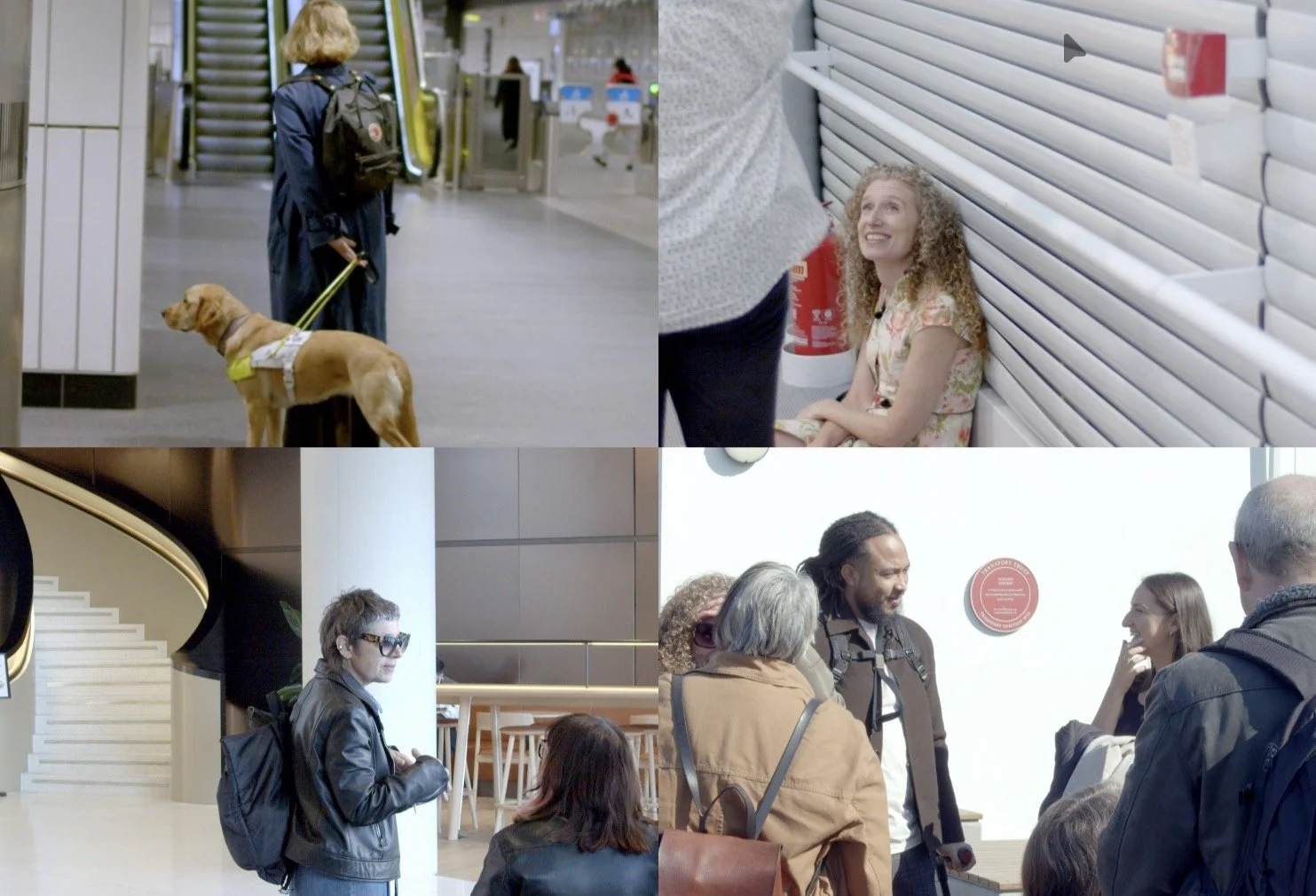
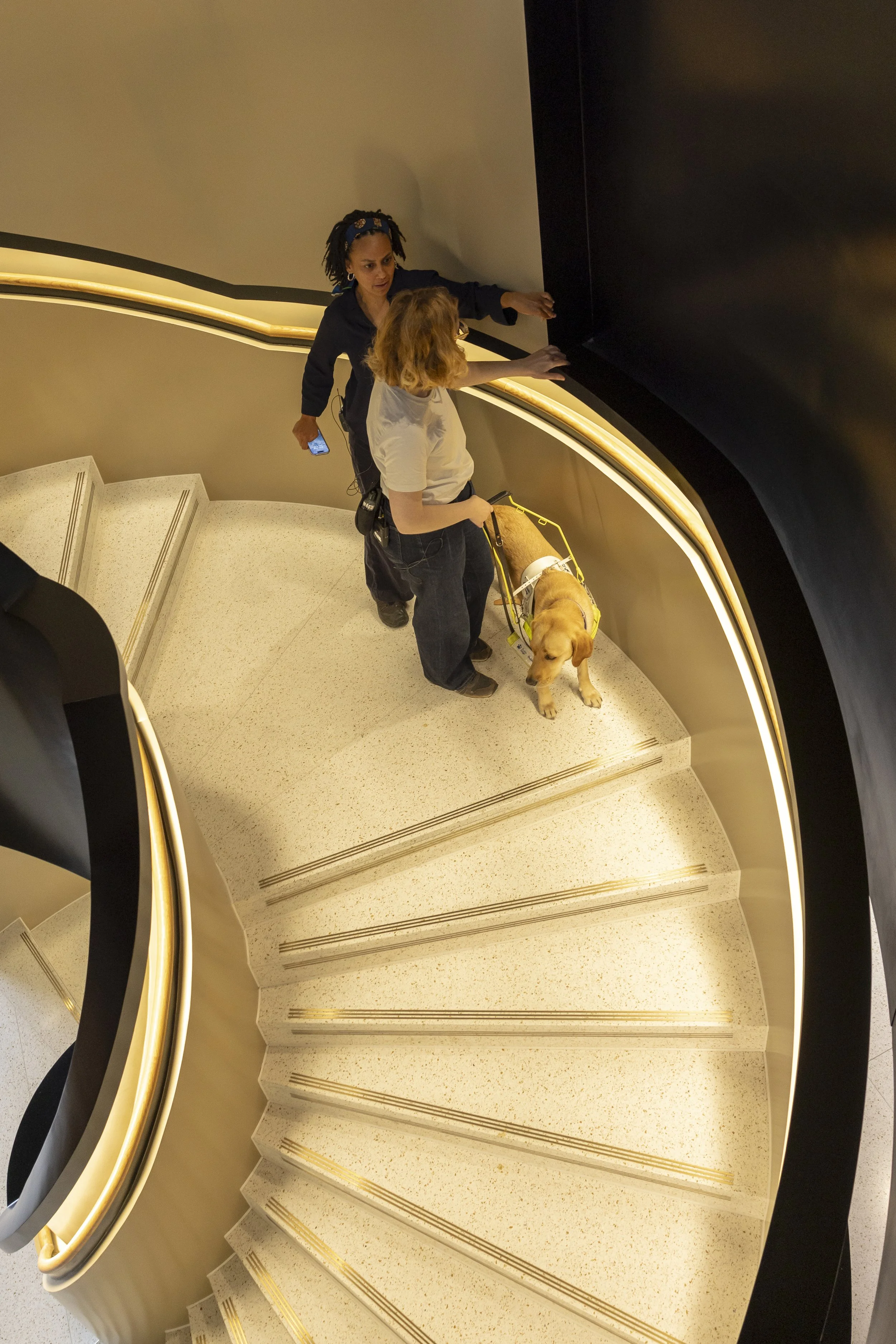
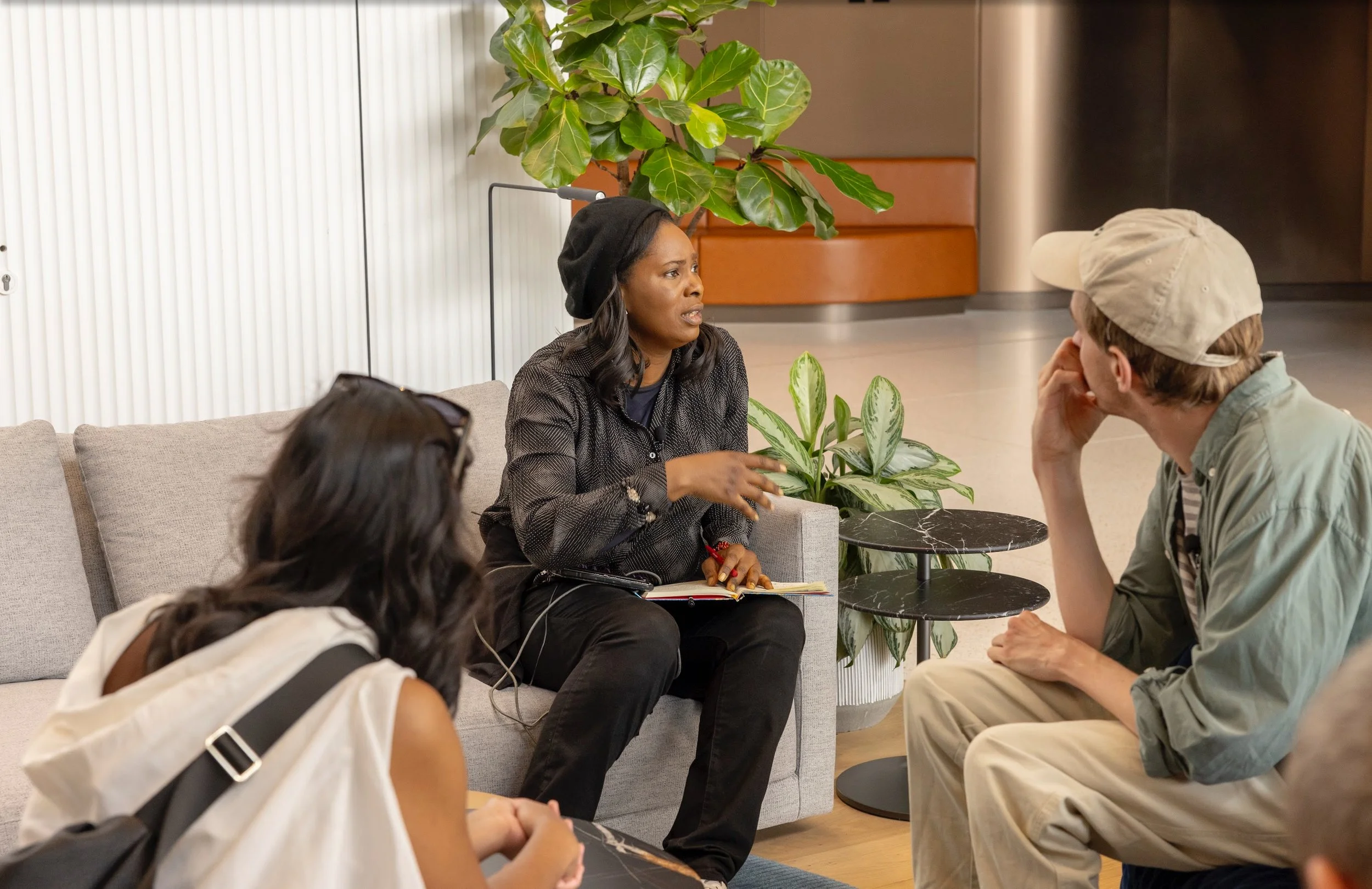
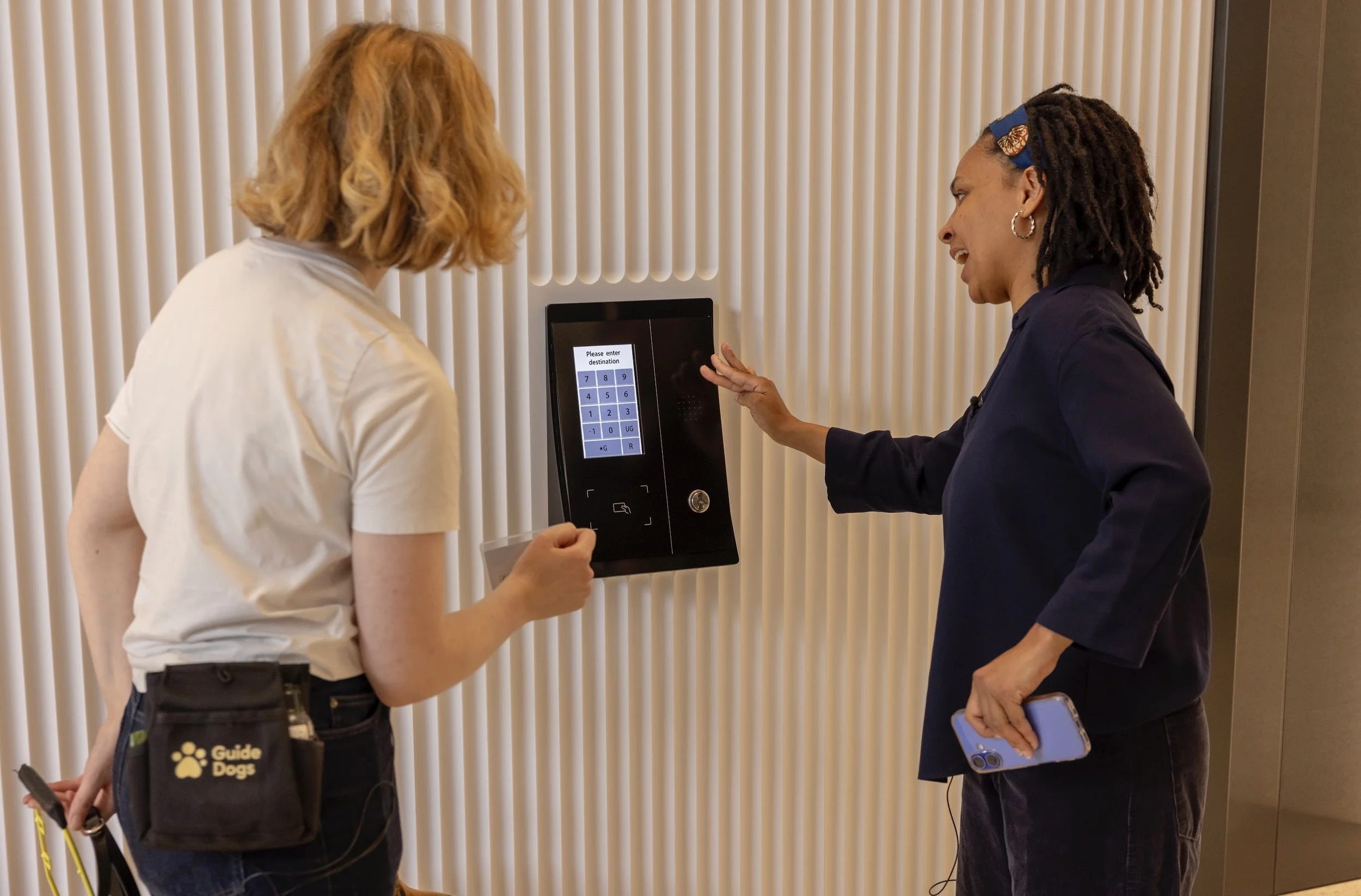
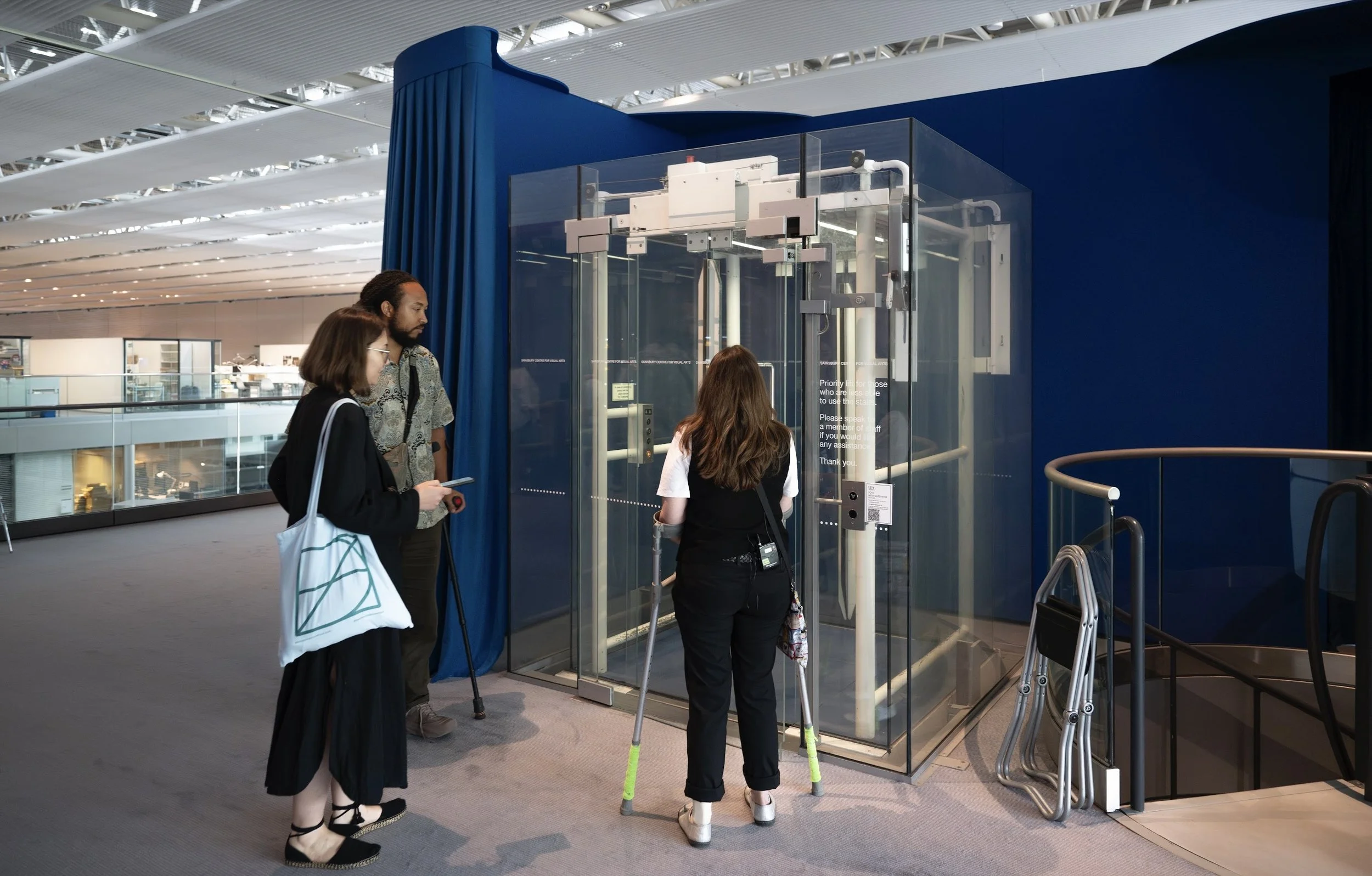
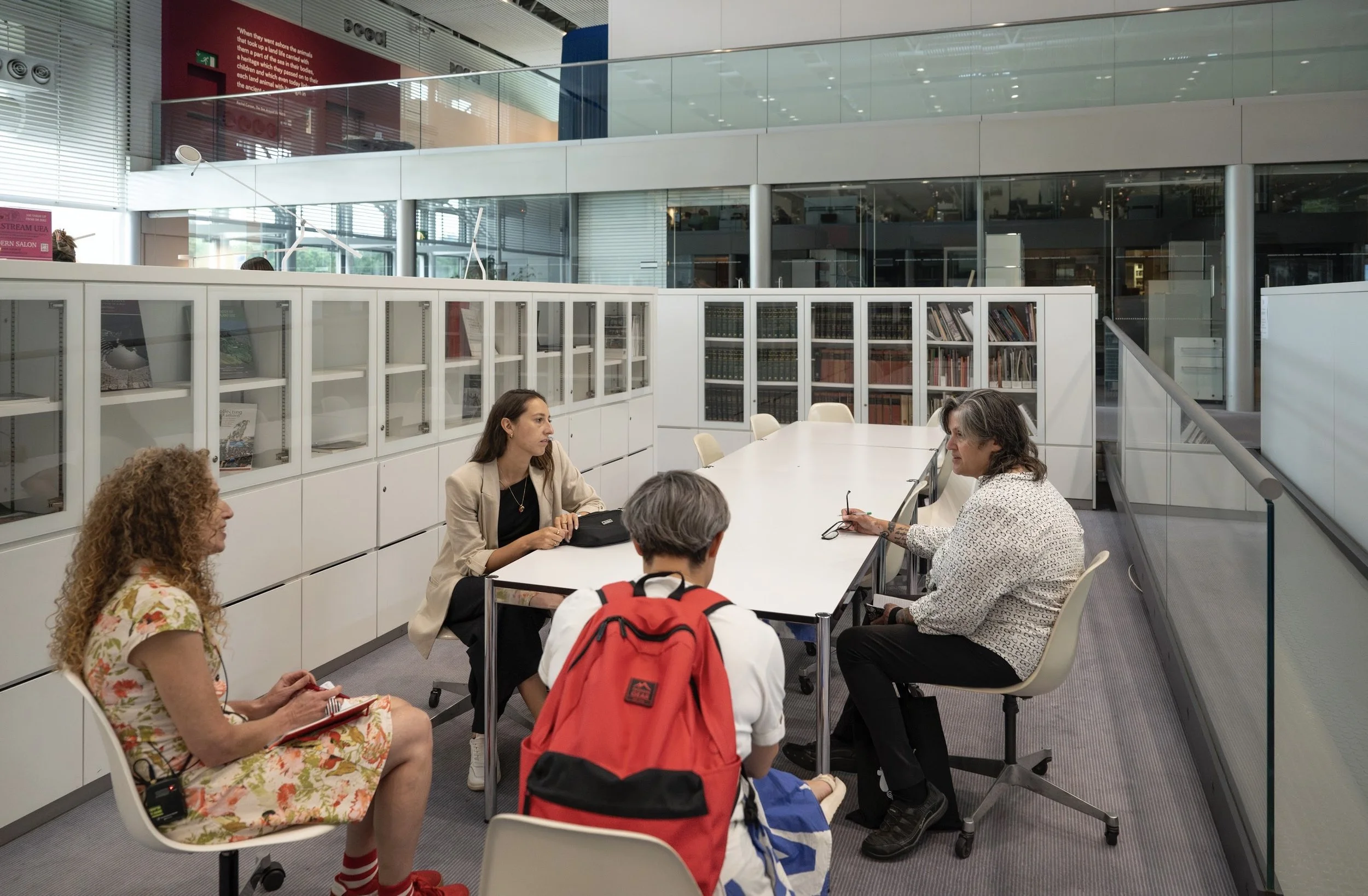
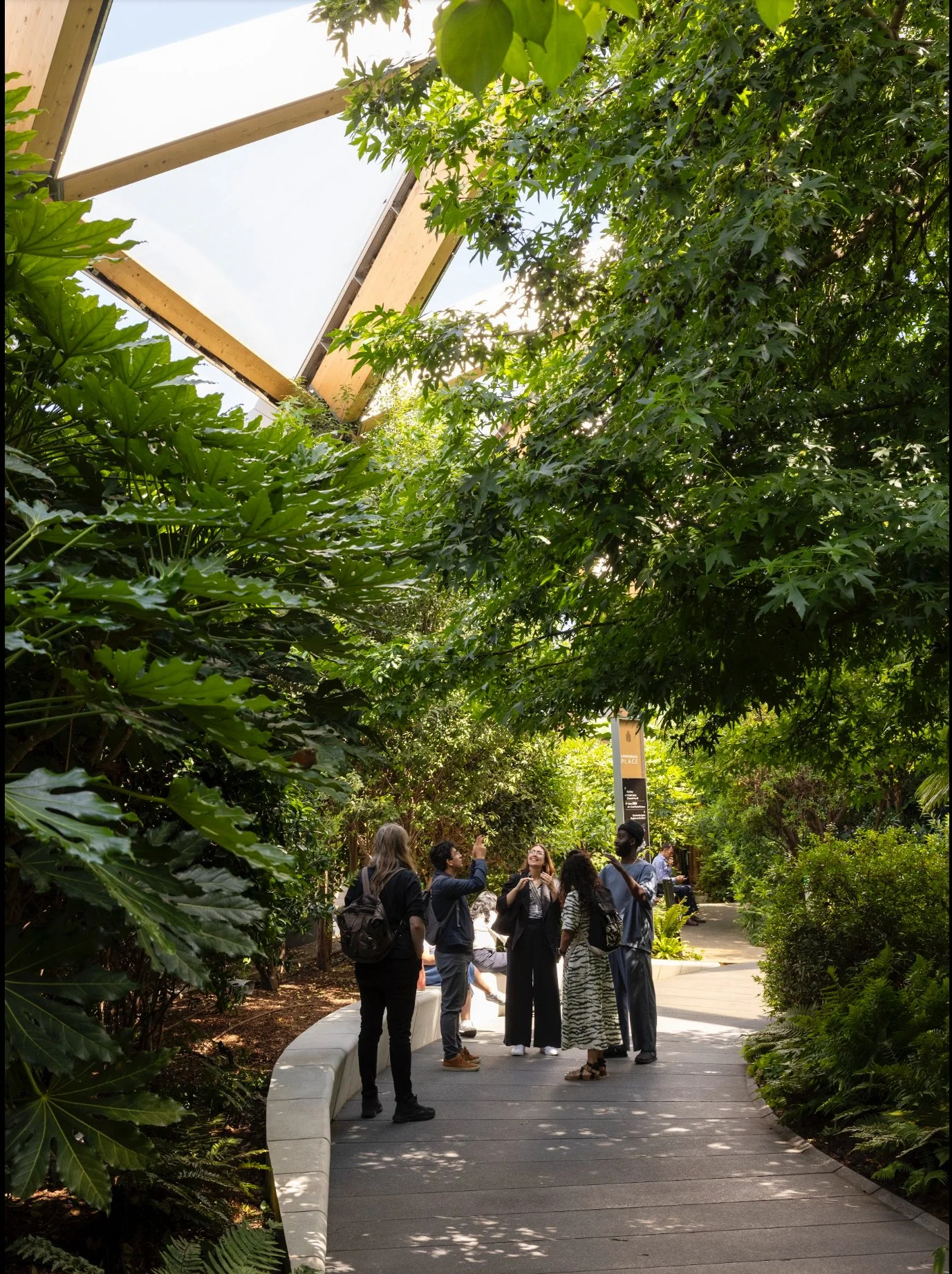
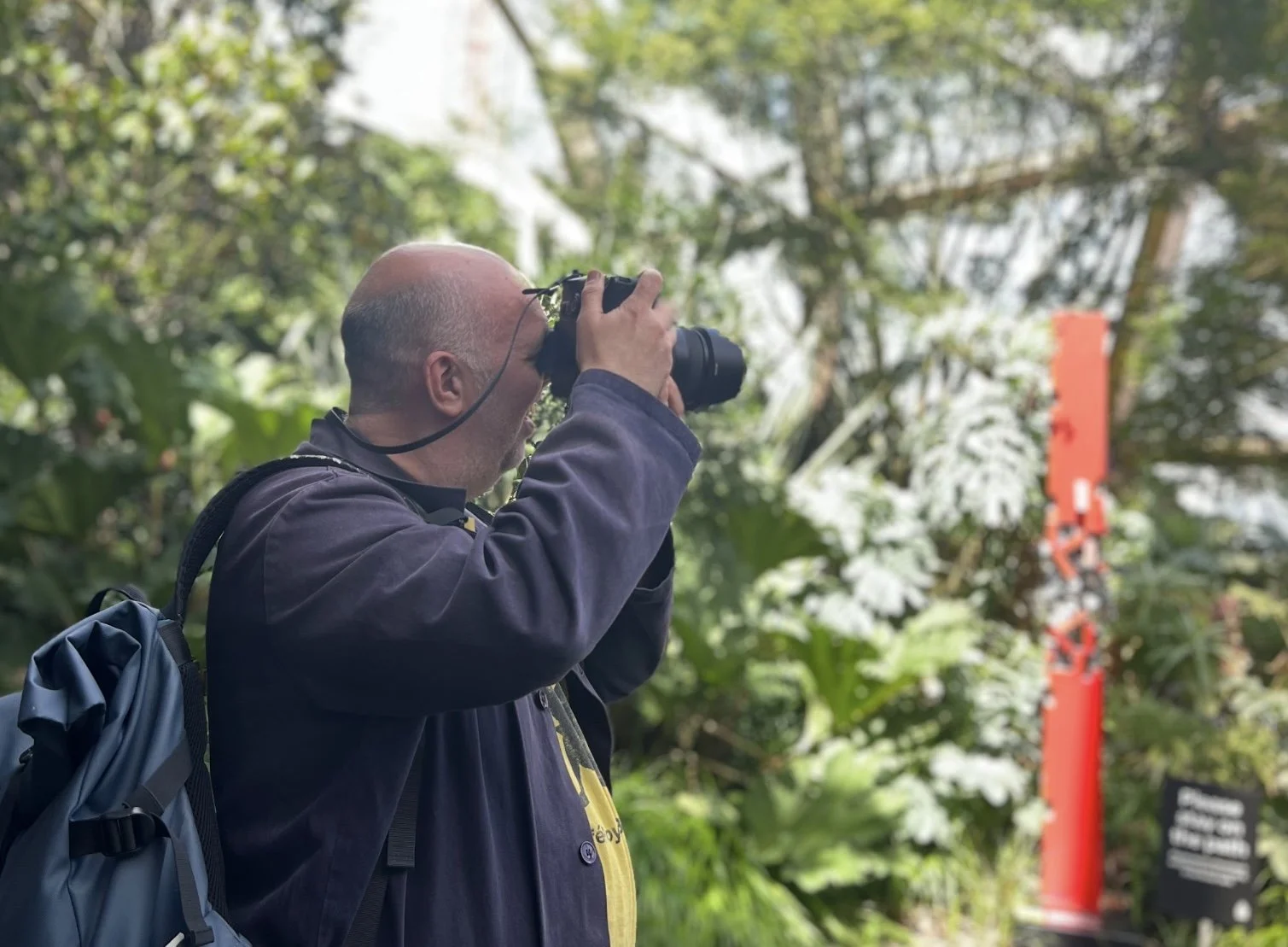
To capture diverse lived experiences that could inform the toolkit, we started by visiting five Foster + Partners projects with 21 Disabled creatives and examined each through the lens of three key themes – entrances, urban rooms (interior public/social spaces) and toilets.
At each site, two pairs of Disabled creatives and a note taker explored the site and captured their responses through a variety of media – photos, audio, video, notes and sketches.Key themes were consolidated in online workshops, which brought together all creatives and aimed to deepen and add richness to the data through discussion. This Disabled and creative-led data was then transformed into a series of reports, which brought together the site visit data, and workshop conversations into key themes using grounded theory. These reports were then compiled with the practices’ own technical guidance and made available to all architects at Foster + Partners - alongside the practice’s in-house training - to support their work as they make more inclusive design decisions.
This project was also a moment to model and test a process that rethinks how Disabled people can be involved in conversations about access and inclusion. Rather than either an access forum (which is often under-resourced and reactive to existing projects in progress) or an access consultancy (where disabled experts are brought in to ‘do the work’ of functional access in new projects) we wanted to test alternatives. By bringing relatively large numbers of disabled creatives to review their lived experiences of existing buildings, we hope to build up a body of research data that can ‘illuminate’ design work on every building project. The aim is not to provide a checklist of barriers, or to offer simple design ‘solutions’ but to open up to view the alignments and differences across and between various disabled people in using buildings.
We are particularly interested in providing detailed – but also complicated – information about diverse access needs, that can help shape designers values and priorities around inclusion. This has too often been implicitly framed by both an assumption of ‘normal’ users, and through the aesthetic and conceptual trends of architecture as a discipline.
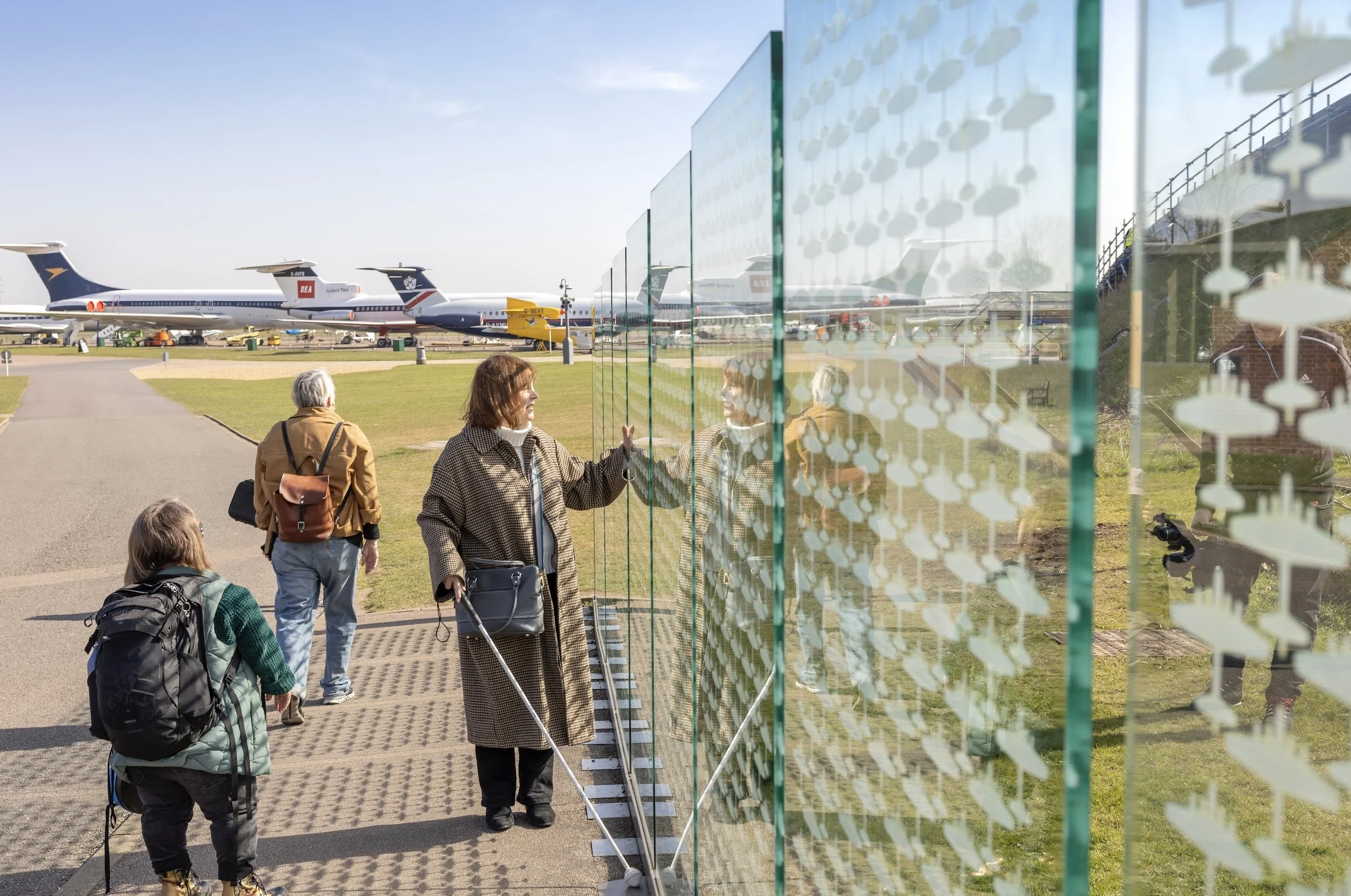
To explore Entrances, we were joined by Disabled creatives:
Efe Chamay (Architect), Helen Stratford (Artist and Architect), Mandy Redvers-Rowe (Writer) and Roseanne Scott (Architect) at the Imperial War Museum, Duxford.
James Zatka-Haas (Artist and Writer), Jordan Whitewood-Neal (Researcher), Natasha Trotman (Designer) and Poppy Levison (Architectural designer and researcher) at Crossrail Place in London.
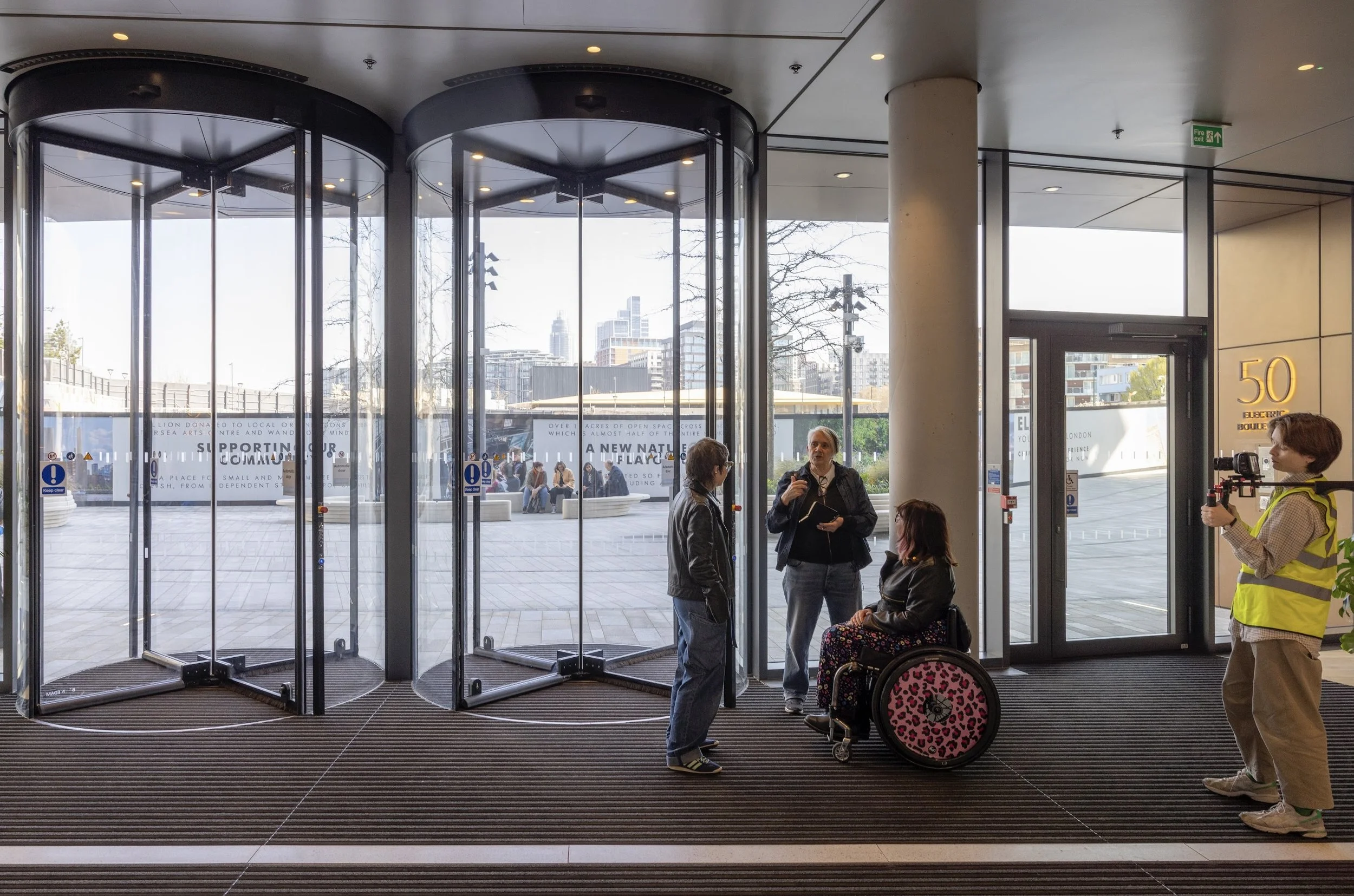
Benedict Phillips (Artist), Nina Tame (Writer and content creator), Nina Thomas (Artist) and Sonia Boue (Artist) at 50 Electric Boulevard.

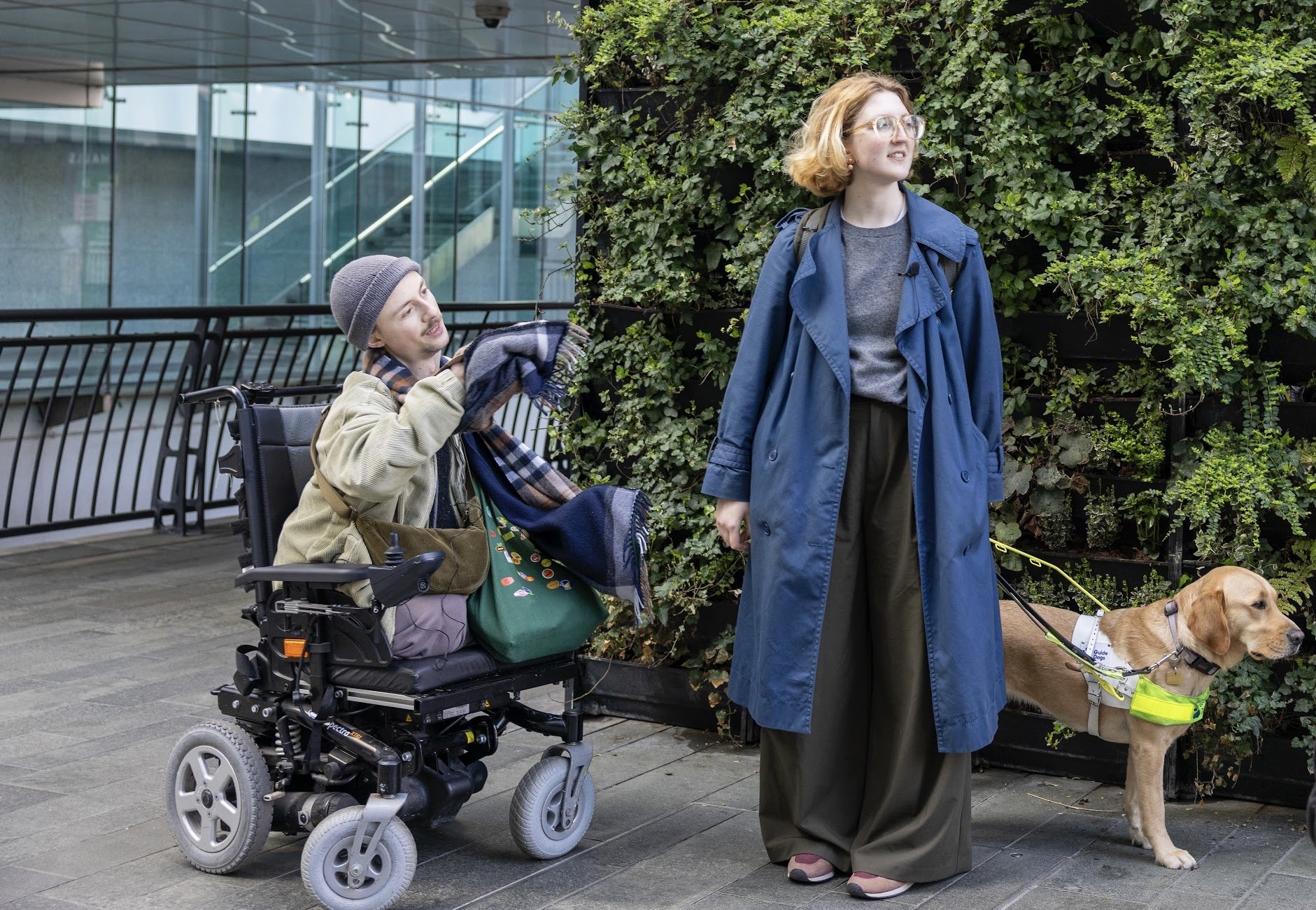

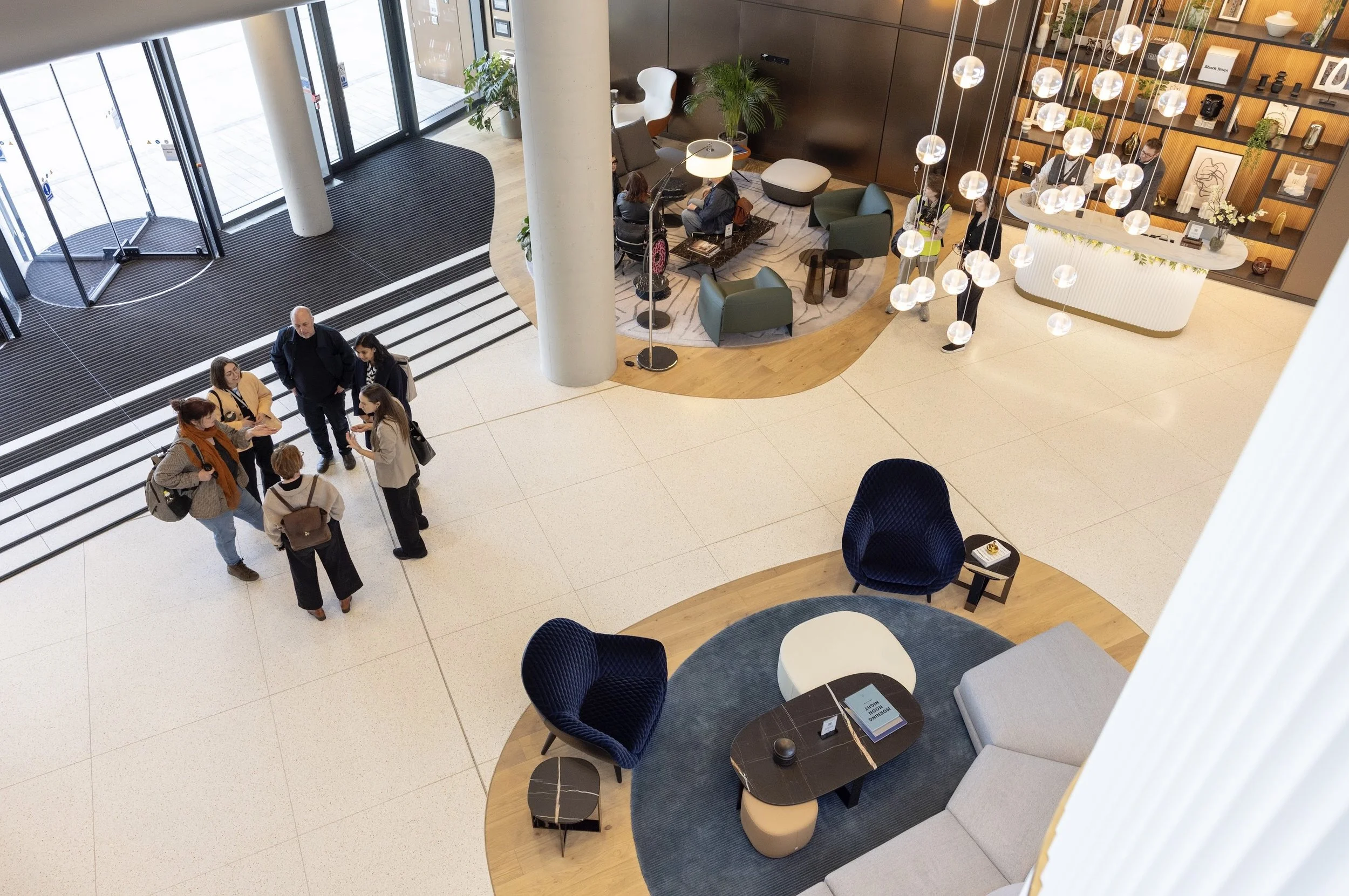
To explore urban rooms, we were joined by Disabled creatives:
James Zatka-Haas (Artist and Writer), Jessica Ndegwa-Ryan (Designer), Natasha Trotman (Designer) and Poppy Levison (Architectural designer and researcher) at 50 Electric Boulevard.
Caroline Cardus (Artist), Dolly Sen (Artist), Efe Chamay (Architect) and Helen Stratford (Artist and Architect) at the Sainsbury Centre, Norwich.
Amanprit Arnold (Disability Urbanist), Benedict Phillips (Artist), Chris Laing (Architectural Assistant) and Nina Tame (Writer and content creator) at Crossrail Place in London.

To explore toilets, we were joined by Disabled creatives:
Dolly Sen (Artist), James Zatka-Haas (Artist and Writer), Nina Tame (Writer and content creator) and Zoe Partington (Artist) at the Sainsbury Centre, Norwich.
Efe Chamay (Architect), Poppy Levison (Architectural designer and researcher), Richard Amm (Researcher and designer) and Roseanne Scott (Architect) at the Imperial War Museum, London.
Abi Palmer (Artist), Nina Thomas (Artist), Richard Amm (Researcher and designer) and Sam Beer (Recording artist) at 50 Electric Boulevard.

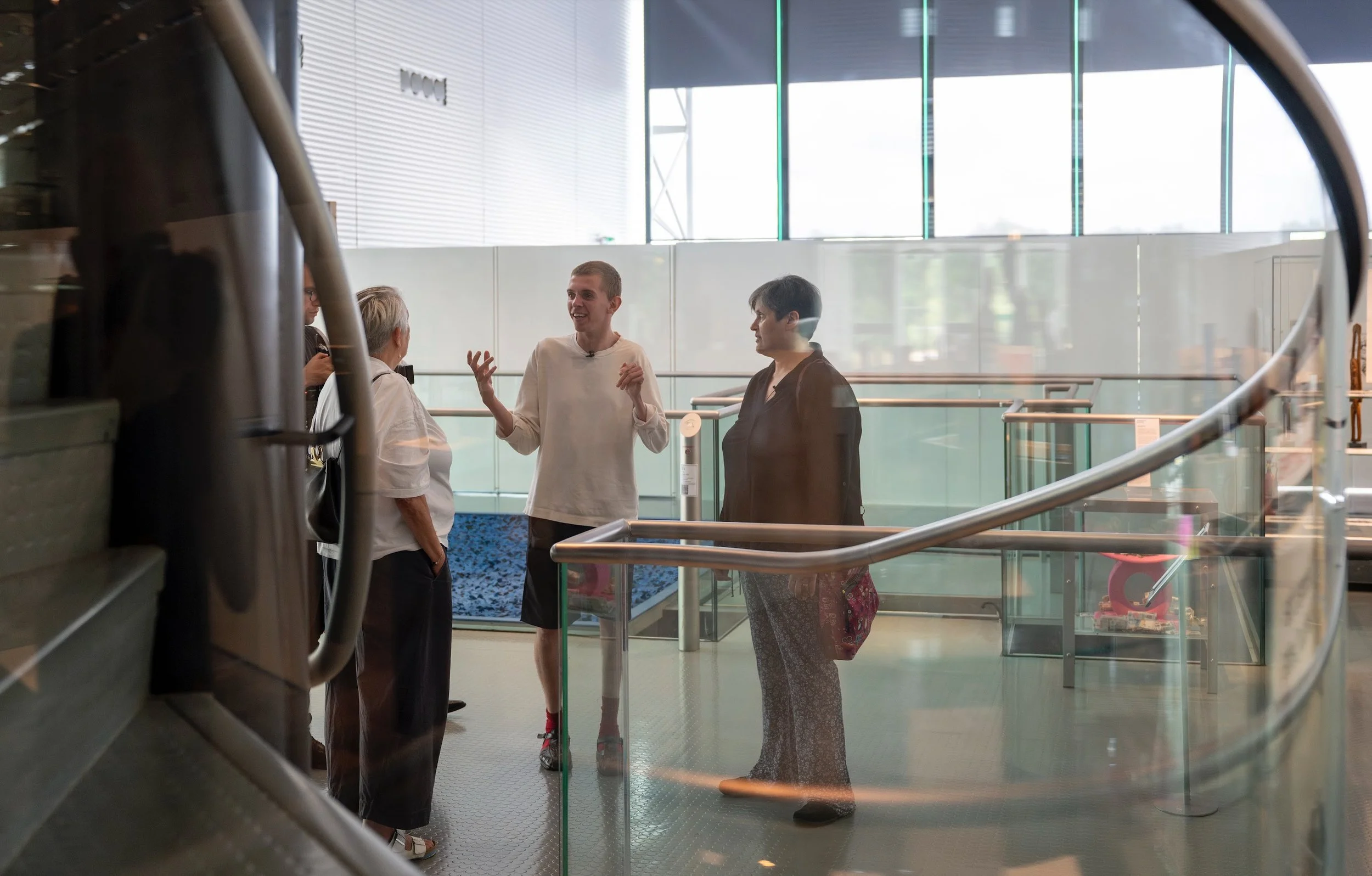
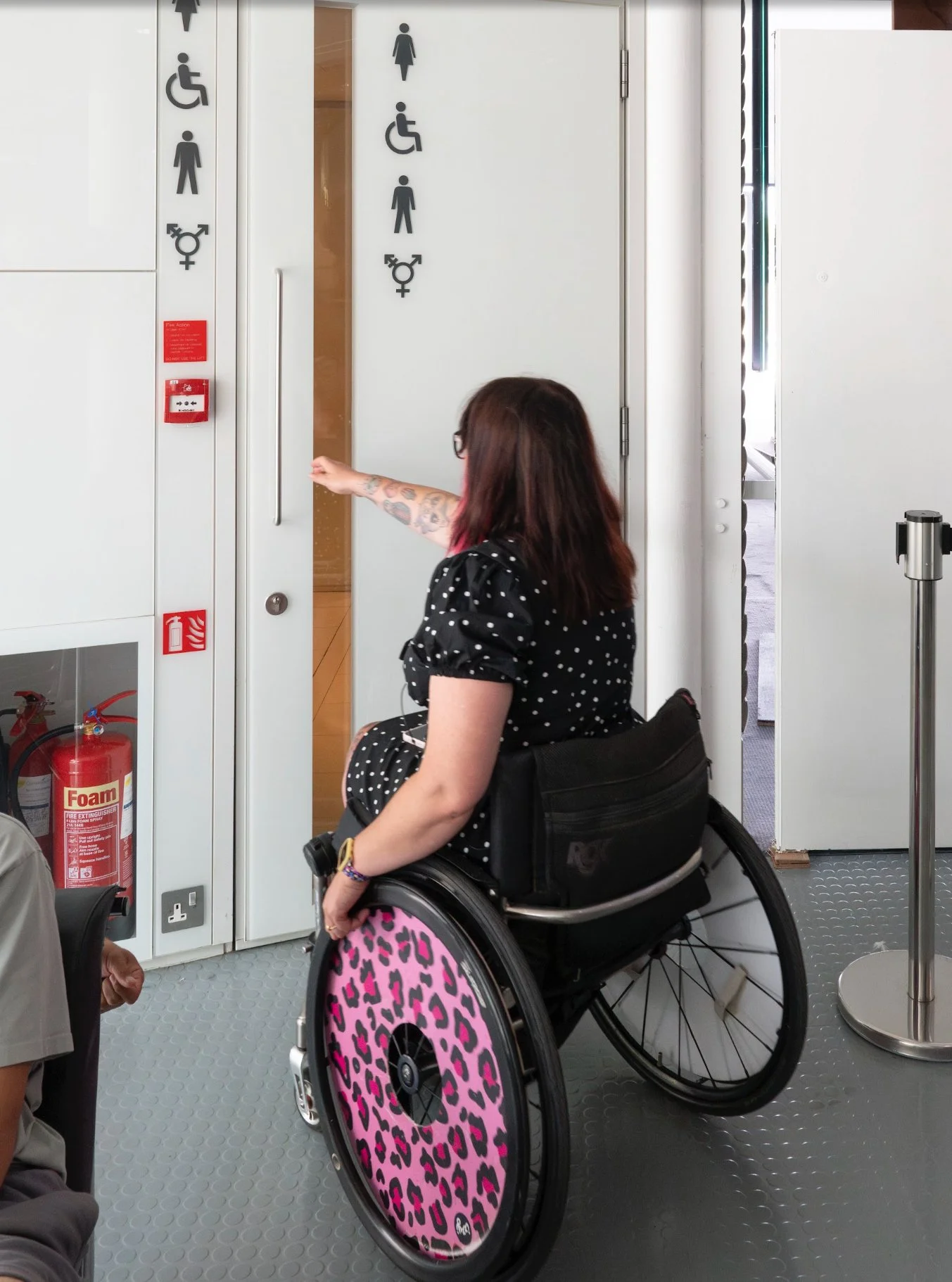
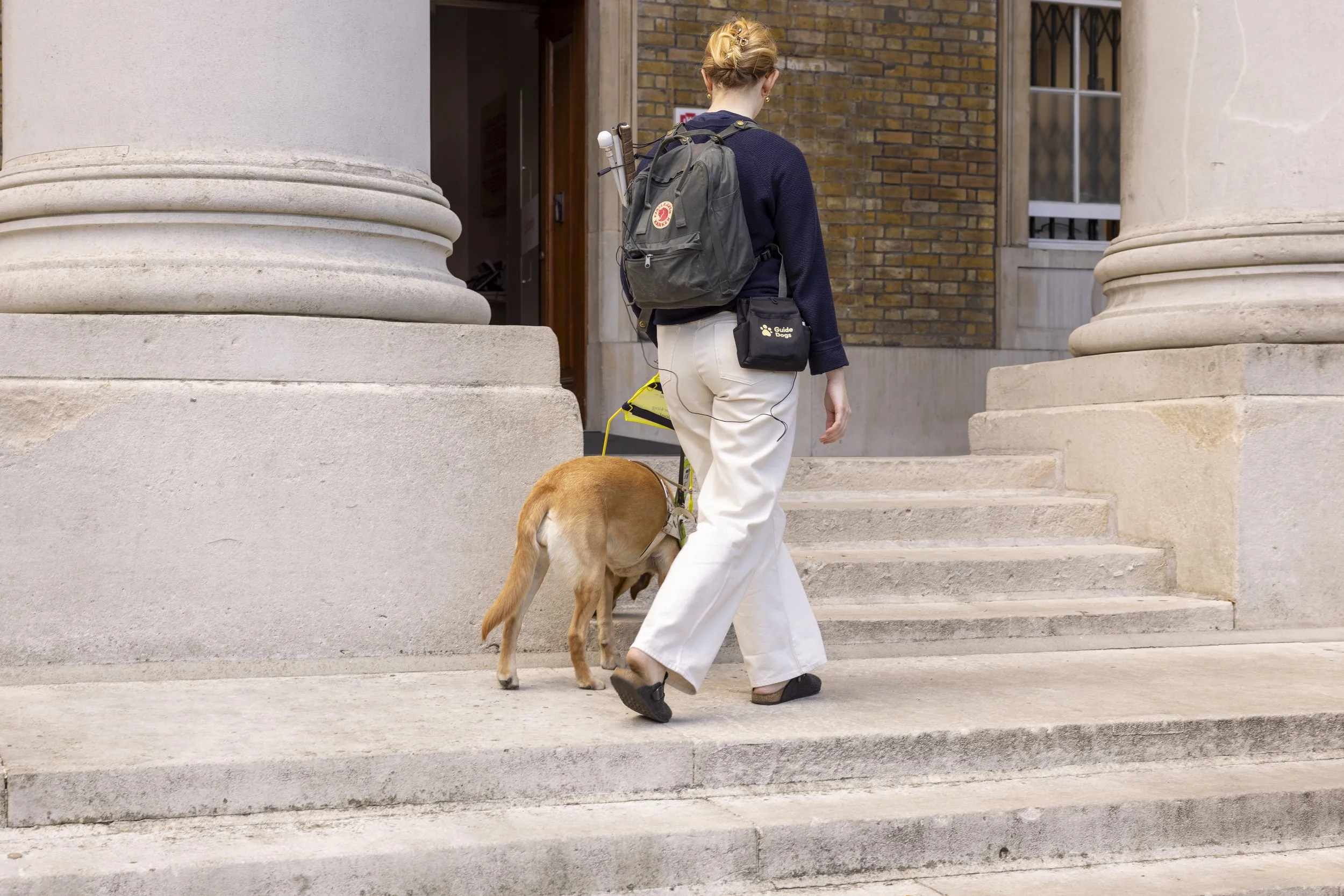
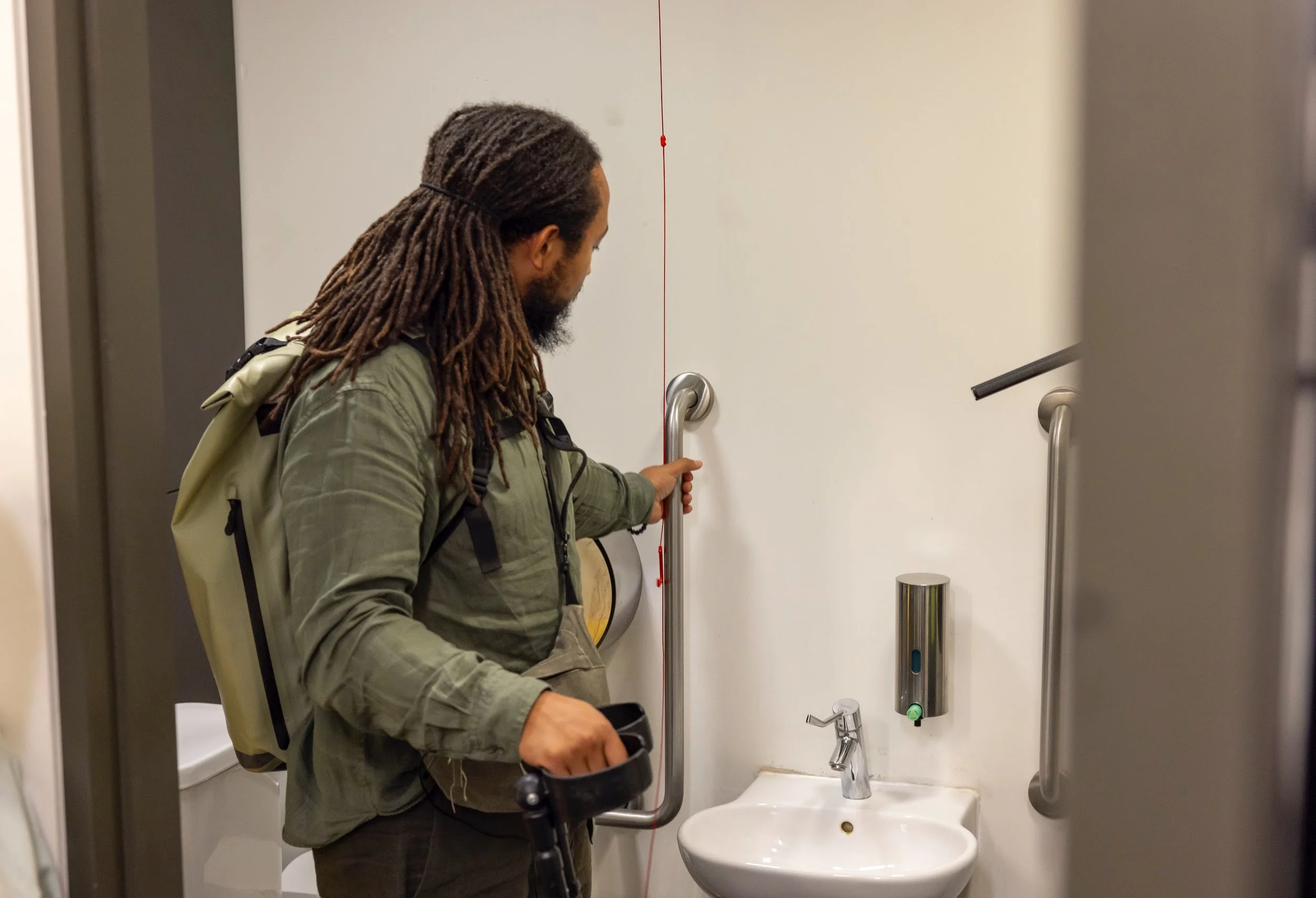
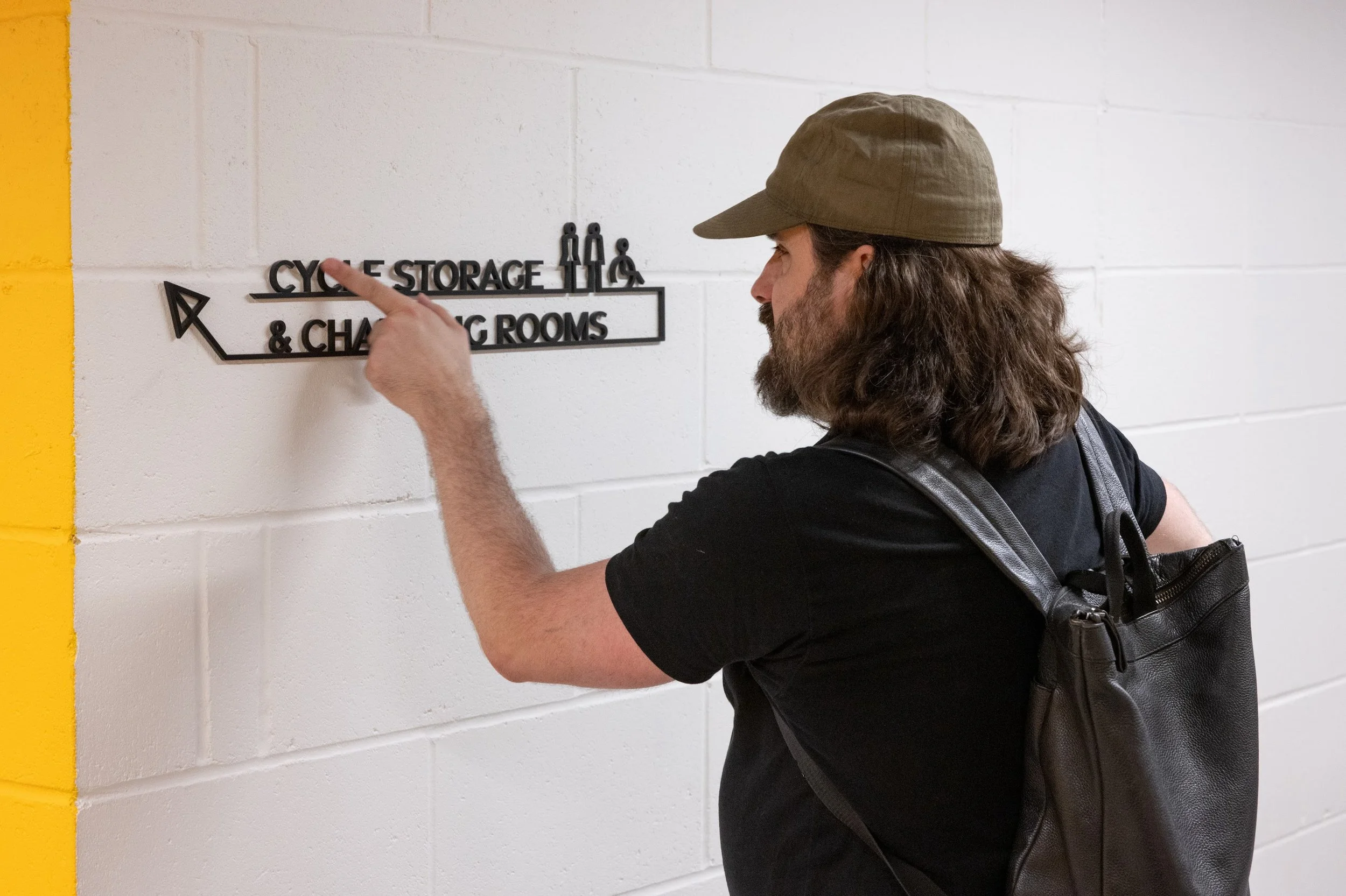
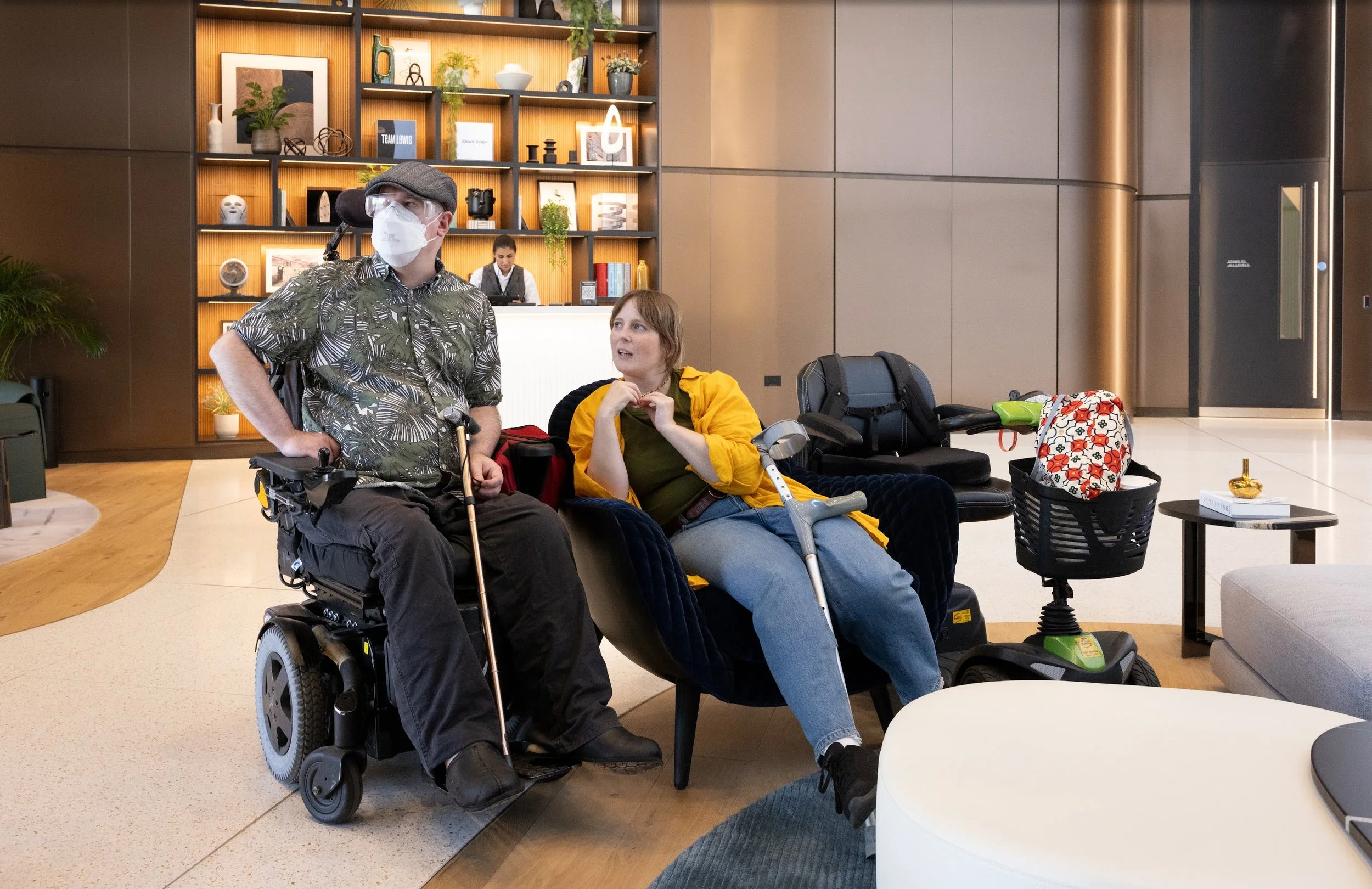
Photo credits: Aaron Hargreaves, Nigel Young and Tom Miller / Foster + Partners
In 2026, Foster + Partners released a film connected to the research project. Check out the film below!